Skip to content
SECAPesg lab

SECAP management platform for municipalities

Build the inventory, assess the risk. Lock the plan with evidence.

The SECAP Management Platform manages the municipal emission inventory, risk and vulnerability assessment, energy poverty indicators, targets and actions inside one tenant boundary. Every result traces back to its source data version, evidence, method and approval.

It does not submit to MyCovenant automatically; it produces a package ready for manual upload. Official acceptance belongs to the Covenant of Mayors process.

Plan cycle · 2026Synthetic sample
Data items24
In technical review5
Open findings3
Readiness by module%
BEI inventory82
RVA and risk64
Energy poverty51
Targets and actions38

Recent activity

  • Public building electricity useData center · nowIn technical review
  • Heatwave risk scoreRVA and risk · 3 min agoApproved
Representative view of the application; organisations, figures and states are synthetic.
Sources behind the method
  • Covenant of Mayors SECAP guidebook
  • GHG inventory guidebook
  • Risk and vulnerability guidebook
  • Energy poverty guide
  • SECAP monitoring guide

From municipal data to a locked plan, in three steps.

Instead of scattered e-mails and spreadsheets, data requests, evidence, technical review, calculation and approval move through one workspace in a traceable order.

  1. Set up the municipality and plan cycle.

    The municipal profile, plan cycle, roles and users are defined; all working data is bound to the municipality and the plan cycle.

  2. Collect the data, attach the evidence.

    Requests go to departments and data owners; Excel/CSV files and evidence are uploaded, graded for quality and technically reviewed.

  3. Calculate, approve, lock.

    The BEI calculation runs on the server with versioned factors; once through technical review and approval, the result is locked and carried into the report package.

Sample product view; people, organisations and figures are synthetic.

Features

What does the platform do? One workspace.

From the first data request to the final report package, every step runs in one application under one evidence and approval discipline.

Evidence and source trail

Each data item moves from request to lock through explicit states; files pass a quarantine scan, and an A–E quality grade and source trail stay on the record.

requested→received→technical review→approved→in calculation→locked

grade A · scan clean · public-buildings-electricity-2024.xlsx

Compliance gates

Compliance findings are raised and closed before the final SECAP; no final package is produced until the council decision gate is passed.

gates · sample progress; not a substitute for official acceptance

SECAP modules

Workspaces bound to the same plan cycle:

  • BEI inventory
  • RVA and risk
  • Energy poverty
  • Spatial analysis
  • Anonymous survey
  • Targets and actions
  • Stakeholder engagement
  • Monitoring

Roles and access

Each role sees only what its work needs; backend authorization and database row-level security apply together.

  • SECAP coordinatorplan cycle
  • Calculation specialistinventory and factors
  • Consultantby invitation, limited

Audit trail

Sign-ins, data changes, approvals and locks are recorded with actor, time and reason.

  • 10:12Correction requested · reason recorded
  • 10:40Evidence uploaded · scan clean
  • 11:05BEI result locked

Reports and submission package

The pilot SECAP draft and the final report are produced in Turkish and English from the same locked snapshot.

PDFSECAP reportDOCXEditable reportXLSXMyCovenant package · manual upload
  • Municipal boundary

    Each municipality’s data lives in its own tenant, protected by backend authorization and PostgreSQL row-level security.

  • Mandatory second factor

    Every user signs in with e-mail, password and a second factor; the workspace stays closed until it is enrolled.

  • Versioned calculation

    Calculations run deterministically on the server with versioned factors; a locked result is never edited in place.

  • Turkish and English

    The interface and the per-language narrative fields offer the same functional scope in both languages.

  • Spatial analysis

    Neighbourhood and risk layers are processed with PostGIS; externally prepared maps are linked with their source trail.

  • Anonymous survey

    Energy poverty surveys run without directly collecting identity, and their results feed the indicators.

Every SECAP figure in the report traces back to its source and approver.

Answer an audit question without hunting for files: the value, source data version, factor used, evidence and approver sit on the same trail.

Benefits

What does the municipality gain?

The goal is not another dashboard; it is less data-collection effort, figures tied to evidence and a plan process that can be audited.

  1. 01

    No more spreadsheet sprawl

    Data is collected in one workspace instead of scattered files; who uploaded which version, and when, is always clear.

  2. 02

    Easier follow-up across departments

    Which department owes which data, what is late and what needs correcting is visible on screen.

  3. 03

    Every figure has evidence

    Inventory results trace back to the underlying document, factor and approver.

  4. 04

    Comparable periods

    The same method and versioned factors give reproducible results in every monitoring period.

  5. 05

    Compliance gaps surface early

    Missing sections and open findings against the guidebook sit in one list before the final report.

  6. 06

    Institutional memory stays

    Even when the team changes, data, evidence and decision history stay with the municipality.

Modules

The municipality’s whole SECAP effort, in one plan cycle.

Every module uses the same evidence, technical review, approval and lock flow; monitoring and assurance draw on the same records.

01 · BEI inventory

Baseline emission inventory.

Consumption and emissions by sector and energy carrier are calculated with versioned factors and locked after technical review.

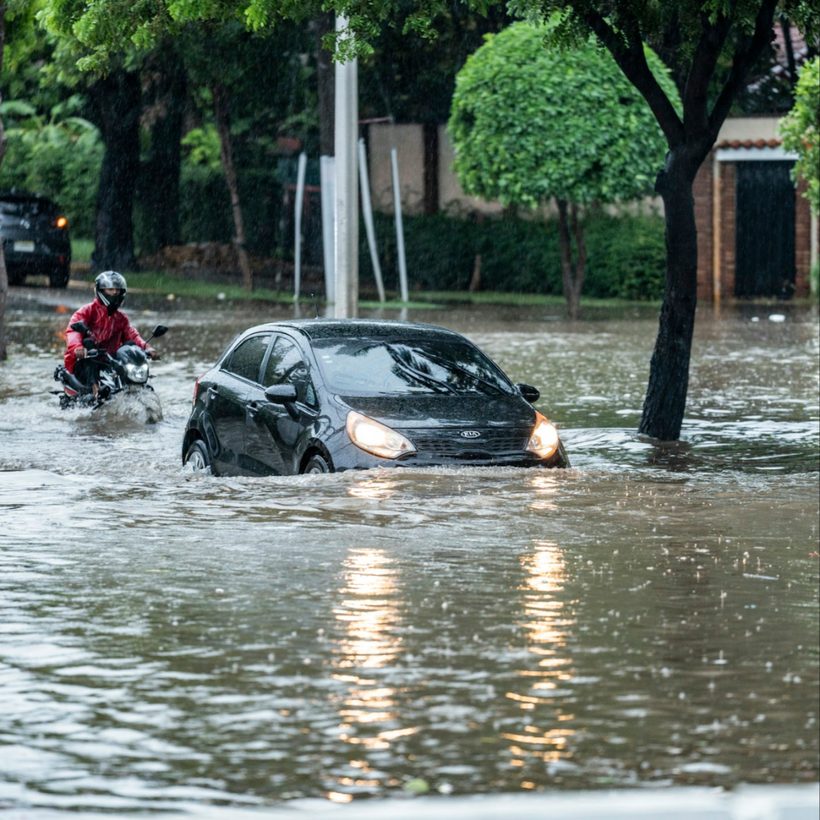
Aerial view of a residential grid of streets and rooftopsVehicles crossing a flooded street after heavy rainTall residential blocks among trees at duskApartment buildings with rooftop solar panels, from aboveCity view with residential blocks, main roads and green spaceA team working around a table, from above
inventoryriskpovertyactionsspatialpeople
1 / 6: Baseline emission inventory

Reporting

Don’t guess which department sent what. See it on screen.

Request status, quality grade and review outcome per data item in one table. Close the items that need correction before the deadline.

  • Pending, late and to-be-corrected data by department
  • A–E quality grade and evidence scan
  • PDF, DOCX and a MyCovenant package ready for manual upload
Data items6 records · 2026 · synthetic data
Synthetic data items and their status
UnitData itemGradeStatus
Public Works DepartmentPublic building electricity2024ALocked
Support Services DepartmentMunicipal fleet fuel2024BApproved
Natural gas distributorResidential natural gas use2024CCorrection requested
Transport Planning DepartmentPublic transport fuel2024BIn technical review
Electricity distributorStreet lighting2024—Requested
Climate Change DepartmentWaste disposal volume2024DCorrection requested

States are shown in text as well as colour; unit names and values are synthetic.

FAQ

Common questions.

If your question isn’t here, let’s look at it together in a demo call.

Is each municipality’s data kept separate?

Yes. All working data is scoped to the municipality (tenant), and plan data is further bound to the plan cycle. Separation is enforced by backend authorization together with PostgreSQL row-level security.

Who performs the calculations?

Users do not enter results. Calculations run deterministically on the server with versioned methods and factors; a locked result is never edited in place but superseded by a new version.

Does it submit to MyCovenant automatically?

No. Without a verified official API contract, the platform produces a MyCovenant package ready for manual upload.

How is sign-in protected?

Besides e-mail and password, a second factor is mandatory for every user; the workspace cannot be reached until it is enrolled.

Can the platform invent results or evidence?

No. The platform does not invent evidence, factors, regulations or calculation results; every decision is made by an authorised user through the approval chain.

Is the interface available in English?

Yes. The interface is in Turkish and English, and report narrative fields are kept separately in both languages.

Contact

Let’s open a demo workspace for your municipality.

Let’s talk about your SECAP preparation and priorities; setup, users and module scope are configured to your needs.

Address
Yahyakaptan Mah. A11:26, İzmit / Kocaeli